
Have you ever thought about how important words are in our lives? Whenever you order a used book on the internet, you trust just a few words. Words like “Very Good,” “Acceptable,” or “Like New.” But how trustworthy are the sellers about the condition of used books? The actual story is simple. It can be extremely different.
The reliability level of the description is based on three aspects. For instance, the seller’s experience is the first one. The second one is the business size. The third one is whether or not you check the listing carefully. Whether you can rely on it is not a yes or a no. Rather, it’s a skill you can develop.
Now picture that. You order a book classified as “Good.” Then instead of that, you get a book that seems like it has been through a flood. Frustrating, isn’t it? This guide for the year 2026 will help you find your way out of that situation. We will teach you to comprehend condition grades. You will learn to identify reliable dealers. We will provide you with a checklist to analyze any listing. Plus, you will be informed on how to act if the book doesn’t match its description.
Key Takeaways
- Grades are just a starting point. A seller’s detailed notes and photos matter more than a basic grade like “Good” or “Very Good.”
- Know your seller type. Big warehouse sellers are different from professional book dealers. Their reliability and description styles vary.
- Check before you buy. Use a simple checklist to review seller feedback, photos, and other listings. This reduces your risk.
- Learn the language. Phrases like “ex-library” or “remainder mark” have specific meanings. They tell you the true condition of a book.
- You have options if things go wrong. If a book arrives in worse condition than described, you can contact the seller. You can also use marketplace guarantees to get help.
The Official Language: What Do Used Book Conditions Actually Mean?
In order to evaluate a seller’s description, you have to know how to communicate with them first. Most Internet retailers have a grading scale that is similar. Being familiar with this scale is the first stop. It enables you to understand what to expect.
There are no set rules for book grading. However, a certain standard has emerged through the years.
The Grading Scale from “As New” to “Poor”
Consider these grades as a map. They will give you a general view of the book’s condition. However, the seller’s detailed notes are always more important. Major sites such as AbeBooks provide detailed explanations. You can view the general breakdown in A guide to used book conditions – AbeBooks.
Here is a table that is really simple. It shows you the relationship between the grade and its common meaning.
| Condition Grade | What It Generally Means | Common Flaws to Expect |
|---|---|---|
| As New / Fine | The book is perfect and unread. It looks like it just came from the publisher. | None. The book and dust jacket are perfect. |
| Like New / Near Fine | Looks almost new but may have been read once. Shows very minor signs of handling. | A tiny bit of shelf wear on the dust jacket edges. |
| Very Good (VG) | A clean, solid copy that shows some signs of being read. A very common grade. | Minor scuffs, a faded spine, or a small tear on the dust jacket. No major damage. |
| Good (G) | The average used book. It is complete and readable but has obvious wear. | Creases on the spine, a previous owner’s name inside, some highlighting, or a worn cover. |
| Fair / Acceptable | A worn book that is complete but has big flaws. Good for reading, not for collecting. | May have a loose binding, heavy highlighting or notes, water stains, or a damaged cover. |
| Poor / Reading Copy | The book is heavily damaged. Its only value is that the text is complete and readable. | Loose pages, torn cover, heavy stains, and major problems. |
Why “Good” Isn’t Always Good for Collectors
The word “Good” can be quite deceiving. If all you want is to read a book, then a “Good” book is fantastic. It is cheap, and the whole story is complete and easy to read.
A collector of books feels “Good” is often not good enough. This is how the word is interpreted in this context; the book has signs of wear that are easily noticeable. It’s not considered collectible. Different sites can also have slightly different standards for what constitutes a “Good” book. The similarities are mentioned in some of the comparisons of Book Condition Ratings Explained & Compared. This is why it is essential always to read the seller’s notes. They enable you to find out the actual flaws in any used book.
The Seller Spectrum: From Mega-Warehouses to Specialist Booksellers
Knowing the person selling the book is as important as the grade condition. How dependable is the seller’s condition description for used books often hinges on what business model they are using? Sellers divide into three categories.
The Mega-Warehouse Seller
Theirs are the big, mass-volume sellers. Surely, you have heard of or dealt with the likes of ThriftBooks, and Better World Books. These companies move thousands of books every day.
Their descriptions are often basic and automated. For example, a listing might just say, “Good condition. May contain highlighting or a previous owner’s name.” They always use stock photos, never actual pictures of the particular book.
Theirs are pretty good but not detailed descriptions. You might get a “Good” book that is actually “Very Good.” However, the huge volume may account for mistakes. Cheap readers should use these sellers while randomly accepting a few surprises.
The Professional Independent Bookseller
These sellers are mainly the ones who have their own websites where they sell their products. Specifically, they often have an online presence on AbeBooks or eBay. The business of books is their life line. Reputation is wealth for them.
Professional sellers are those who are mostly trusted to deliver true condition descriptions. They write per book notes. They will specify any actual defects with terms like “chipped dust jacket corner” or “light foxing on page edges.” Most times, they include pictures of the actual book. The reason why their descriptions are dependable is that their businesses go through the accuracy.
The Casual or “Side-Hustle” Seller
This group includes people who are selling books from their own collections. It also includes people who use services like Fulfillment by Amazon (FBA).
Their reliability is inconsistent. Some of them are book lovers who put detailed effort into their descriptions. Others are inexperienced and may not know how to grade books. The key issue in this regard is their lack of experience. A casual seller might not understand that a “remainder mark” means the book could never be “Like New” but “Very Good” at best. For these sellers, your own research is essential.
Your Pre-Purchase Investigation: A 7-Step Checklist for Vetting Any Used Book Listing
Being a smart shopper is as simple as playing the role of a detective. By following a simple checklist, you can judge how reliable the seller’s condition description for used books is. So before clicking “buy,” do the following:
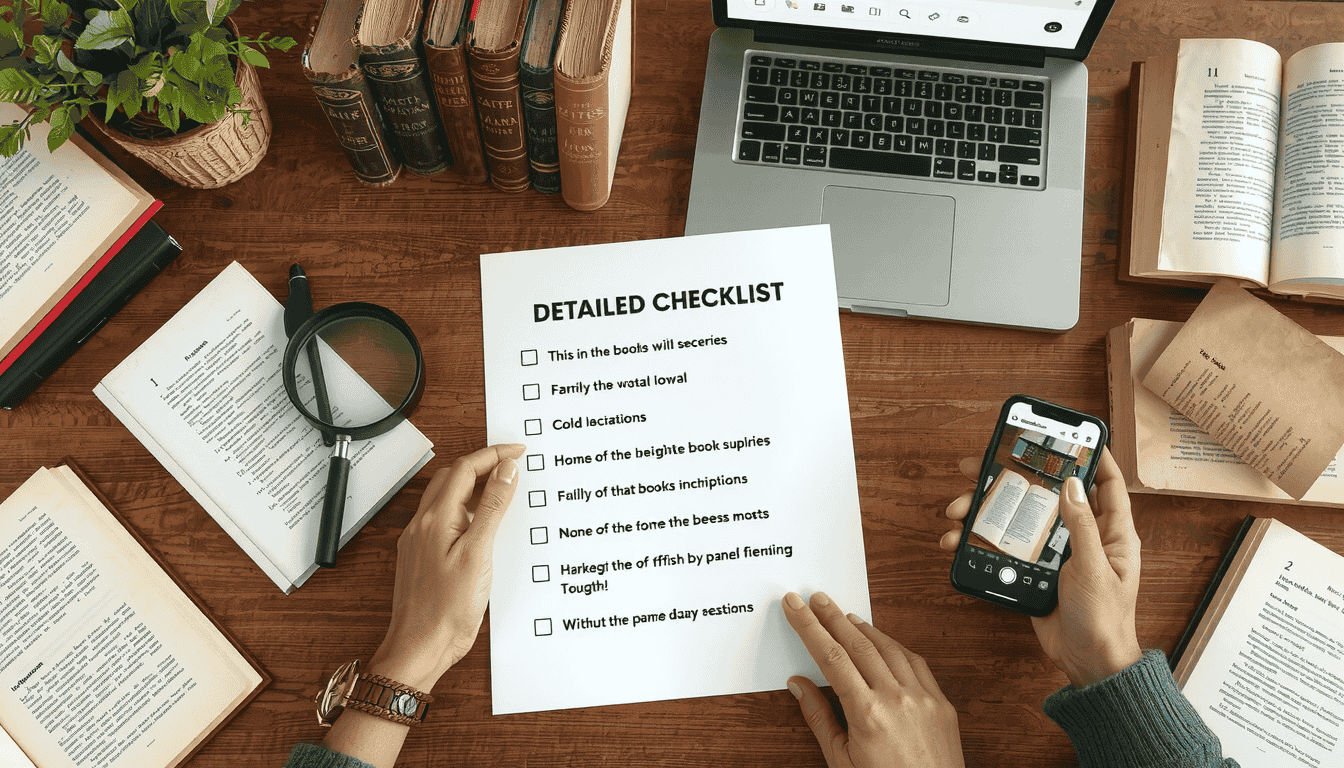
- Step 1: Ignore the Grade, Read the Notes. The base grade is merely a category. The bare truth is in the seller’s custom description. Did they mention a “tight binding” or a “creased spine”? Specific details show a careful seller. Vague notes are a red flag.
- Step 2: Look Closely at the Photos. Are you looking at a stock photo or a picture of the actual item? For any book where condition matters, avoid listings with only stock photos. Always look for photos showing the copyright page (to check the edition). Also look for photos of the cover corners and the spine to see any creasing.
- Step 3: Check the Seller’s Overall Rating. A positive feedback rating of 98% or above is really reassuring. This indicates that more buyers were delighted with their experience. But this is just the starting point of your investigation.
- Step 4: Read the Bad and Neutral Reviews. This is where the ugly truth is. Scroll past the positive comments. Try to identify patterns in the bad ones. Are there complaints about slow shipping? That is less worrisome. Are they complaining about wrong grading and books arriving in worse condition than described? That is very concerning.
- Step 5: Check the Seller’s Other Listings. Click on the seller’s profile. Take a look at the other items they are selling. Do they have a particular focus on books? Do their other listings come with unique descriptions, elaborate details and actual photos? This is a sign of skill and care. If all their listings contain the same basic description, they are probably a high-volume seller with less attention to detail.
- Step 6: Compare Price to Condition. When a seller lists a “Fine” condition first edition for the same price as a cheap paperback, think twice before buying. Scams and false listings often attract buyers with prices that are too good to be true. A price that matches the book condition reflects the seller’s knowledge.
- Step 7: Don’t Be Afraid to Ask Questions. A credible seller will be glad to respond to your questions. Ask for another photo of the book cover. Ask for clarification on a flaw. If they reply swiftly and with helpfulness, it is a sure sign. If they do not respond, it is better to find someone else to buy from.
Reading Between the Lines: Decoding Common Seller Phrases and Red Flags
Sellers sometimes use vague phrases that can hide a book’s true condition. Learning to decode this language will help you better understand what you are actually buying. Some descriptions reveal The Nuances of Book Conditions that go beyond simple grades.
Here are some common phrases and what they likely mean:
- “Some shelf wear”: This is very vague. It could mean a few minor scuffs on the dust jacket. Or it could mean heavily bumped corners and a rubbed-off cover. Always look for photos or more specific notes. We once bought a book with “some shelf wear” that arrived with the cover corners completely soft and rounded from wear.
- “Ex-library copy”: This is not vague at all. It means the book was once in a library. It will always have library stamps, stickers, a card pocket, and often a plastic-covered dust jacket. It will never be in “Like New” or “Fine” condition. But it is often a very sturdy reading copy.
- “Tight binding”: This is a good sign. It means the book’s spine is strong and the pages are firmly attached. It suggests the book has not been opened wide and broken.
- “Remainder mark”: This is a small black dot or line made with a marker on the top or bottom edge of the book’s pages. It means the book was sold by the publisher at a big discount. A book with a remainder mark can never be “As New” or “Fine.”
- “In good shape for its age”: This is a major red flag. This phrase is subjective. It is often used to avoid mentioning specific problems like foxing (age spots), a weak binding, or brittle pages. A good seller will describe the book’s flaws, not make excuses for them.
When the Book Arrives: What to Do if the Condition Doesn’t Match
Even with careful research, you might receive a book that is not as described. Don’t worry. There is a clear process to follow to fix the issue.
Step 1: Document Everything

Before you do anything else, take clear photos of the book. Capture the flaws that were not mentioned in the description. If you can, take a screenshot of the original listing description. This lets you compare it with the book you received.
Step 2: Contact the Seller Directly and Politely
Your first step should always be to message the seller through the site’s system. Calmly explain the problem. Attach the photos you took as proof. State what you would like to happen. This could be a partial refund to reflect the actual condition. Or a full refund once you return the book. Most good sellers value their reputation and will work with you to make it right.
Step 3: Use the Marketplace’s Help System
If the seller is unhelpful or does not respond, it is time to use the platform’s buyer protection program. Sites like Amazon (with its A-to-z Guarantee) and eBay (with its Money Back Guarantee) have systems for this exact situation. Open an official dispute and provide your evidence. These programs are designed to protect you from wrong descriptions.
Conclusion: Buy with Confidence, Not with Hope
So, how reliable is the seller’s condition description for used books in 2026? It is as reliable as the effort you put into checking it. By learning the language of book conditions, understanding the different types of sellers, and using a simple checklist, you can move from a hopeful buyer to a confident one.
The world of used books is full of wonderful treasures at great prices. You no longer have to just cross your fingers and hope for the best. You now have the knowledge and tools to be a smart, informed buyer. You know how to decode the deal and find exactly what you’re looking for.
Frequently Asked Questions (FAQ)
1. Is a book listed as “Good” condition actually good?
It depends on your goal. For a reading copy, “Good” is perfectly fine. It means the book is whole and readable but will have visible signs of wear like a creased spine or worn cover. For a collector, “Good” is generally not a high enough grade and is considered below collectible quality.
2. What’s more important: the condition grade (e.g., “Very Good”) or the seller’s detailed notes?
The detailed notes are always more important. The grade gives you a general category, but the seller’s specific notes tell you about the actual flaws. A trustworthy description will list any tears, marks, or other damage, giving you a much more accurate picture of the book’s true condition.
3. Is it safe to buy a book that uses a stock photo?
It can be, especially from large, reputable warehouse sellers who process thousands of books. However, you are accepting some risk because you cannot see the actual item. For valuable, collectible, or gift-quality books, you should always look for listings that have photos of the specific book being sold.
4. What is an “ex-library” book, and should I buy one?
An “ex-library” book is one that was previously owned by a library. It will have library markings, such as stamps, stickers, and a card pocket. They are usually very durable and make for excellent, cheap reading copies. However, because of these markings, they have little to no value for collectors.
5. How reliable are Amazon’s used book condition descriptions compared to a site like AbeBooks?
The reliability depends more on the individual seller than the platform itself. However, platforms like AbeBooks are often used by more professional and specialist booksellers who tend to provide very detailed, accurate descriptions. On Amazon, you will find a wider mix of sellers, including professionals, mega-warehouses, and casual individuals. This is why applying the vetting checklist in this article is so crucial, no matter which site you use.